


California Family Law Lawyers
Ending a Domestic Partnership in California
 Last Updated: October 19, 2026
 Reading time: Est 3 minutes



Many couples in Monterey County registered as domestic partners years before marriage was an option, and some never converted that registration into a marriage. When the relationship ends, the partnership does not end on its own. California treats it as a legal status that must be formally dissolved.
Domestic Partners Carry the Same Obligations as Spouses
Registered domestic partners have the same rights and duties as married spouses under Family Code section 297.5. Community property rules apply. So do support obligations, and so does the duty to disclose finances before any agreement is signed.
A registration filed in 2005 can feel like a formality, but the law treats it as a full legal relationship from the date of filing. A Monterey, CA LGBTQ divorce lawyer will usually begin by confirming that date, because it marks the start of the community estate.
Partnership and Marriage Together
Plenty of couples registered first and married the same person later. Both relationships have to be ended. A single petition in superior court can dissolve both at once, as long as the paperwork requests it.
Two Ways to End a Registered Partnership
Termination Through the Secretary of State
A narrow group of couples can file a Notice of Termination with the Secretary of State instead of going to court. According to the California Courts self-help guide, the partnership ends six months after the notice is filed, and either partner can revoke it during that window.
Qualifying requires all of the following.
- The partnership has lasted fewer than five years.
- No children were born or adopted during the partnership, and neither partner is pregnant.
- Neither partner owns real property, apart from a short residential lease.
- Community property and debts fall under the limits set by the Secretary of State.
- Both partners waive partner support and sign a written property agreement.
Most couples will not meet every item, and the summary dissolution process for marriages has similarly tight limits.
Dissolution in Superior Court
Everyone else files a petition in superior court, much like a divorce. One partner can file without the other’s agreement. For partnerships registered in California, the usual residency rules do not apply, since both partners consented to California jurisdiction when they signed the registration form. A Monterey, CA LGBTQ divorce lawyer can file in the county court even when one partner has since moved out of state.
What the Court Decides
The court divides community property the way it would in a marriage. Disputes over homes, business interests, and retirement accounts go through the same property division statutes.
Support works the same way. A judge can order partner support based on the length of the partnership, each person’s income, and the standard of living the couple maintained. Where children are involved, both partners are legal parents. Child custody orders follow the best interest standard, and neither partner has a stronger claim because of biology.
One difference deserves attention. Federal law does not recognize registered domestic partnerships, and that gap can change how taxes and certain retirement benefits are treated. Pension division in these cases often needs more planning than it would in a marriage.
Schank Family Law has handled same-sex divorce and partnership matters since 2013 and represents either partner in a dissolution. If you’re unsure whether your registration still stands, or which process applies to your situation, a Monterey, CA LGBTQ divorce lawyer can review the paperwork and explain the next step. Contact the office to request a case evaluation.
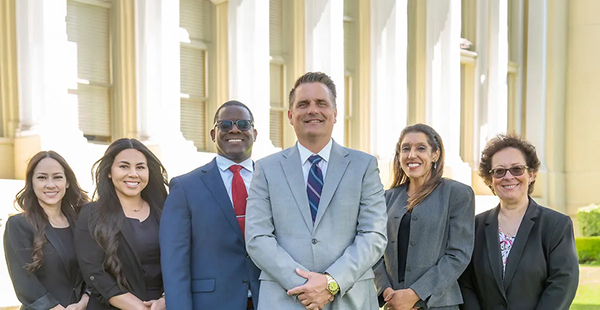
Schank Family Law
Attorney Christian L. Schank founded Schank Family Law in 2003. With eight offices and a Certified Family Law Specialist on staff, the firm handles divorce, custody, support, and property matters in courts across the state.